
A Reflection on Mobile World Congress 2026

Introduction
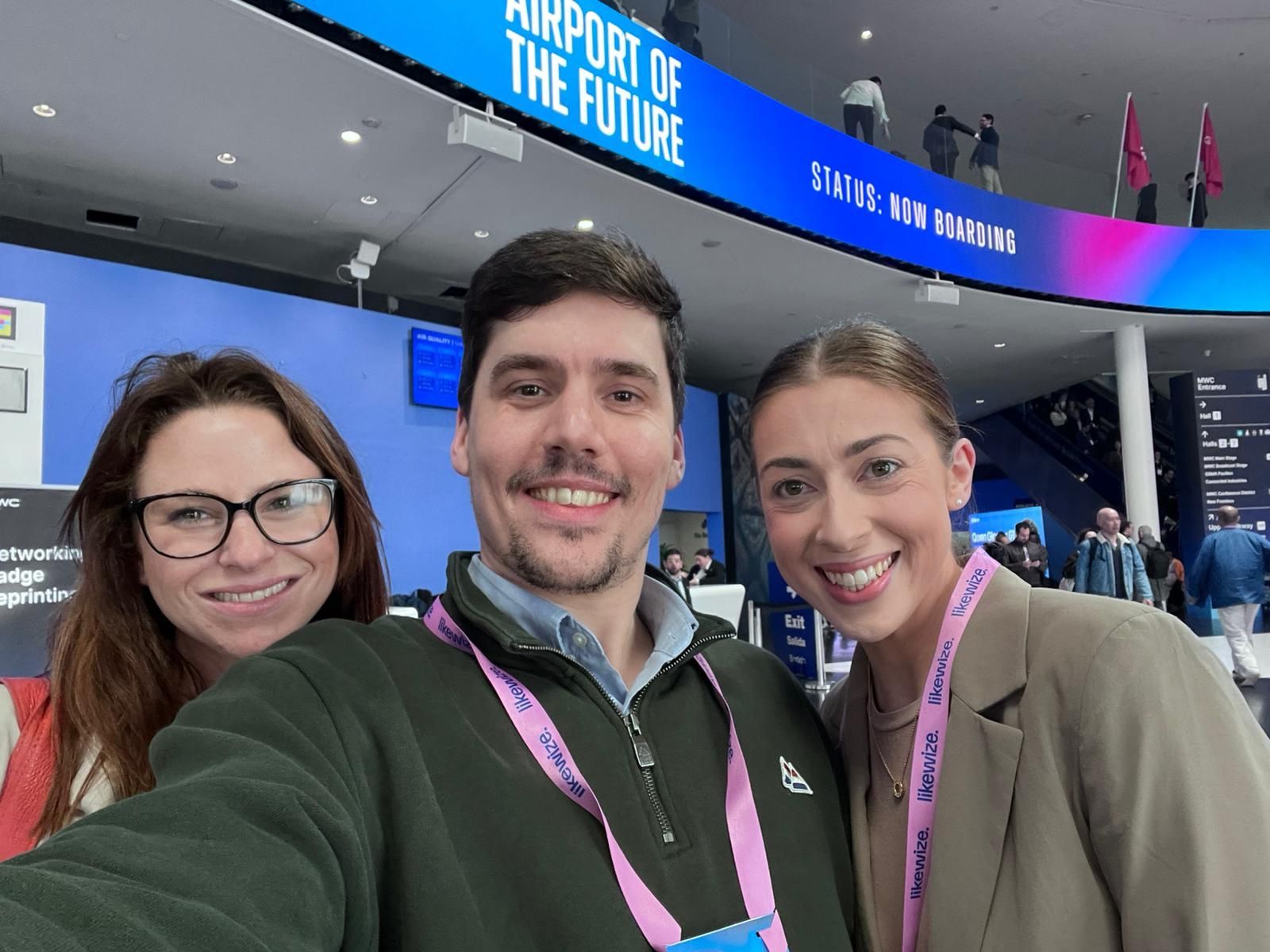
The following report documents my findings from Mobile World Congress (MWC) 2026 my first time attending the event. In the weeks before I left, I wrote a short preview of what I expected to find, based on what my colleagues reported from their time at MWC 2024 and what Jenny Walker, our CMO, described as a “technological circus” at MWC 2025. What I found was all of that, and then some.
What is Mobile World Congress?
MWC is the largest annual trade show in the mobile and telecoms industry, held in Barcelona each year. Major technology vendors including Ericsson, Samsung, Google, Huawei, IBM, and hundreds more use the event to showcase emerging technologies, announce products, and set the agenda for where the industry is heading. In 2026, the show marked its 20th year in Barcelona and drew well over 100,000 attendees across four packed days at Fira Gran Via.
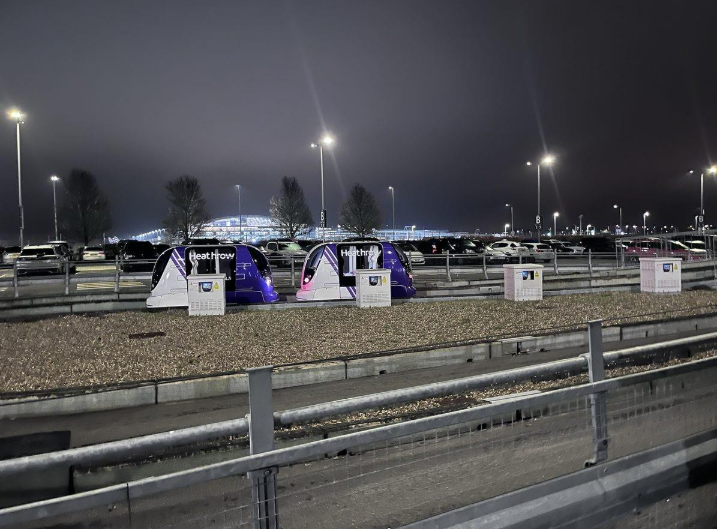
Even before I boarded the flight, there was a small reminder of how quietly technology normalises itself. The autonomous pods at Heathrow’s Terminal 5 car park driverless, electric, and already a few years old barely get a second glance from passengers dragging their suitcases past. Something that would have seemed extraordinary a decade ago is now just the shuttle to the terminal. That sense of technology becoming mundane before we’ve even processed it ran as a thread through everything I saw at MWC.
Major Themes
MWC 2026 was bigger, louder, and harder to summarise than I expected. But stepping back from the noise, three themes stood out above everything else not because they were the flashiest things on the show floor, but because they felt like genuine signals of where the industry is actually going.
AI Has Stopped Talking About Itself
If MWC 2024 was the year AI announced its arrival, and 2025 was the year it showed what it could do, then 2026 was the year AI quietly got to work. The demos I saw weren’t about AI as a concept they were about AI already embedded into live systems, running real operations.
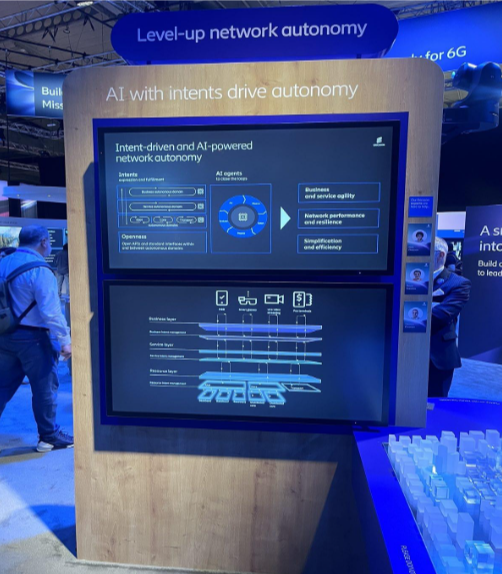
The clearest example was Ericsson’s intent driven network autonomy demonstration. Rather than a network engineer logging in to adjust settings, the system uses AI agents operating across business, service, and infrastructure layers simultaneously reacting to targets set in plain language, automatically managing performance and resilience without human intervention in the loop. The strapline on their stand was “AI with intents drive autonomy,” and for once it didn’t feel like marketing.
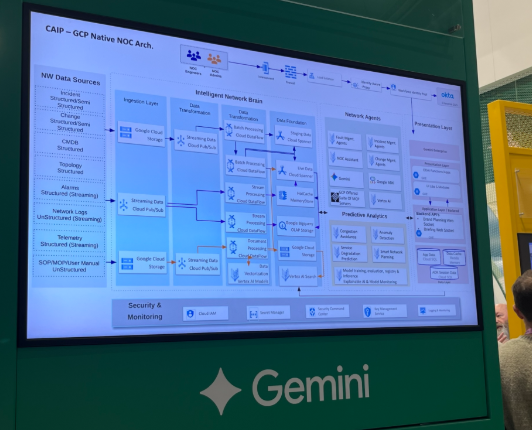
Google took a similarly operational approach, displaying their Gemini powered AI architecture for network operations centres. The system ingests streaming and structured data from multiple sources, applies AI driven predictive analytics for things like congestion avoidance and anomaly detection, and surfaces insights through a Gemini Enterprise interface all without a human needing to define the query.
SK Telecom showed something similar but applied to network quality mapping using AI to model customer experience across transport routes and urban districts in real time, proactively identifying which areas are degrading before customers complain.
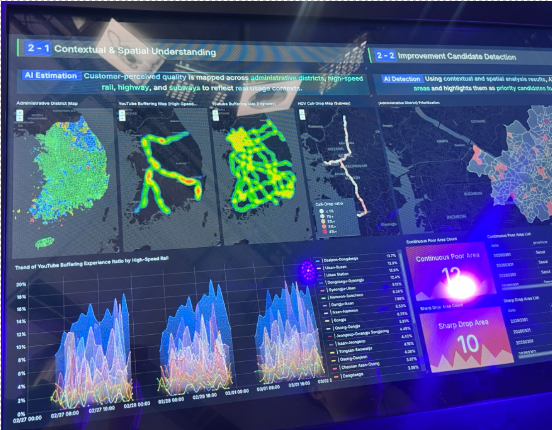
What ties these together is a shift from AI as a tool that helps people make decisions, to AI as a system that makes operational decisions within defined boundaries. For those of us in managed connectivity, this is worth taking seriously. Not because it replaces what we do, but because it raises the bar for what ‘managed’ means.
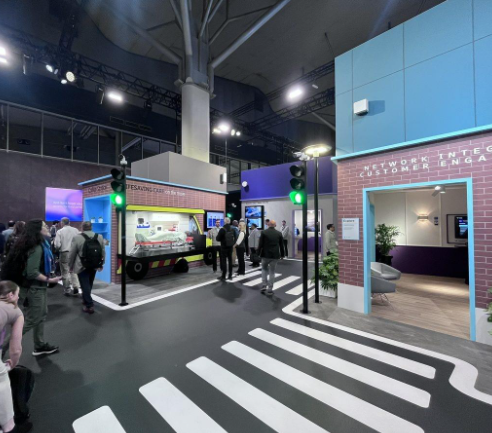
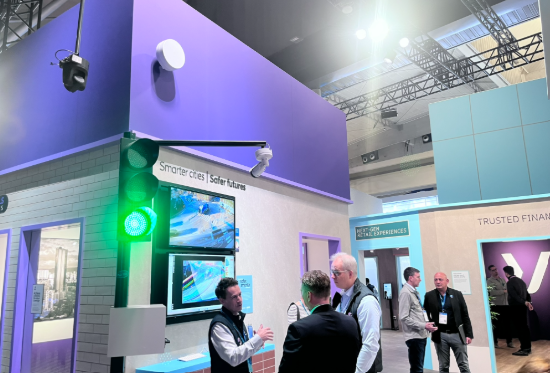
At center-stage for UK Connect at MWC, Ericsson blew us away with their immersive stand. Their approach was easy to digest immediately; How do our products intersect with our day to day lives? Their answer: A small, but operational, city!
Robots Walked Off the Exhibition Stand
I had been told to expect robots at MWC. I was not prepared for how many, or for how capable they looked.
Humanoid robots were present throughout the halls demoing warehouse picking and sorting tasks, interacting with visitors, and in one memorable case, running a full restaurant. China Mobile’s “Robot Restaurant” stand operating under the banner of “Cocreating the AI+ Future” had multiple humanoid robots staffing the front counter and working at kitchen stations. The “Temporarily Closed” sign in the window was a funny touch.
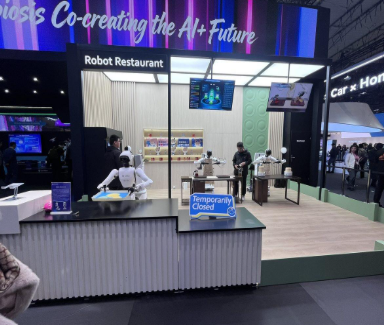
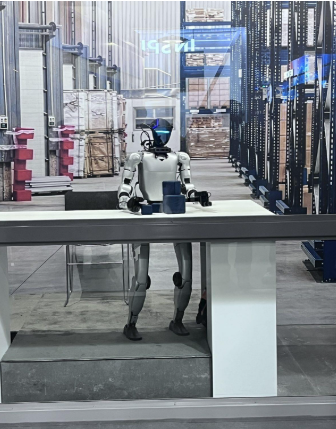
Beyond the spectacle, what struck me was the level of dexterity on show. An interactive demonstration I watched involved a humanoid robot successfully manipulating and passing small, differently shaped objects the kind of fine motor task that has historically been the hardest problem for robotics to solve. We are not at the point where these robots are walking into factories unassisted, but the gap between demo and deployment is narrowing faster than most people assume.
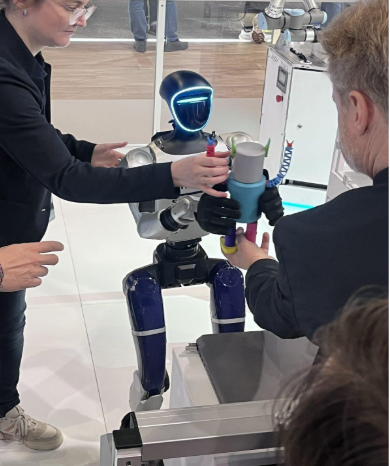
The relevance for industries like logistics, manufacturing, and field services is obvious. And crucially, almost every robot demonstration was tied explicitly to private 5G or next generation wireless connectivity; the low latency and reliability that allows the robot to receive real-time instructions and stream sensor data without lag. Robots are a use case for advanced connectivity, not separate from it.
The relevance for industries like logistics, manufacturing, and field services is obvious. And crucially, almost every robot demonstration was tied explicitly to private 5G or next generation wireless connectivity; the low latency and reliability that allows the robot to receive real-time instructions and stream sensor data without lag. Robots are a use case for advanced connectivity, not separate from it.
6G Is Already Being Designed
I expected 6G to be mentioned. I did not expect it to be as concrete as it was.
Ericsson’s stand referenced 6G readiness throughout, positioning their current AI and network autonomy work as the foundation for 6G architecture rather than a separate chapter. More specifically, MediaTek had an entire display dedicated to what they’re calling a “6G Device Cloud for Agentic AI” a concept in which multiple devices share antenna resources with each other wirelessly, collaboratively enhancing throughput and cell coverage. Their simulation data showed an 83% improvement in cell edge data throughput through antenna sharing between collaborating devices.
The practical 6G timeline for commercial deployment remains somewhere around the early 2030s, but what MWC 2026 made clear is that the foundational design decisions are being made now. The AI native, intent driven, multidevice architectures being demonstrated today are not concepts waiting for 6G; they are 6G taking shape. For an industry that moves slowly but announces loudly, this felt like a meaningful signal.
Cool Tech on Display
MWC wouldn’t be MWC without a section dedicated to things that are either genuinely exciting, slightly baffling, or both simultaneously. Here are the highlights.
IBM Quantum System Two
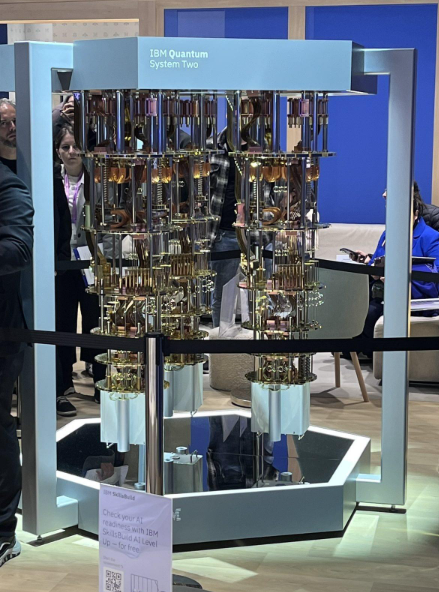
IBM had a full Quantum System Two on display their most advanced quantum computing architecture. It is an extraordinary thing to stand next to; several feet of intricate brass and steel engineering, cooled to near absolute zero, capable of running computations that classical computers cannot. IBM also tied it to their AI readiness materials and Skills Build platform, which was a smart move given that most people at the stand were curious about AI rather than ready to order a quantum computer. Worth seeing once.
Samsung Galaxy S26 Ultra Built-in Privacy Display
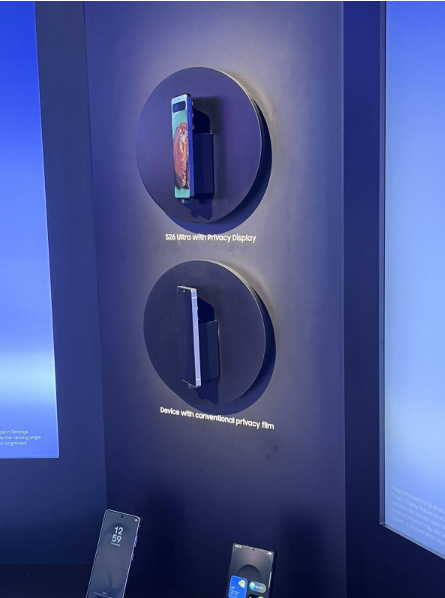
Samsung had a clean, effective demo comparing their new S26 Ultra’s built-in privacy display with a phone using conventional privacy film. The difference is significant: the hardware solution restricts the viewing angle without the brightness or colour degradation you get from a physical film. Samsung goes beyond the traditional all-display privacy protection; Keen eyed readers may notice the black bar at the top of the first phone, this is privacy screening for specific notifications & apps. For anyone in a field based role reviewing sensitive information on the go, service delivery engineers, for instance it is a genuinely useful feature rather than a gimmick. Worth putting on the upgrade radar.
Honor Robot Phone
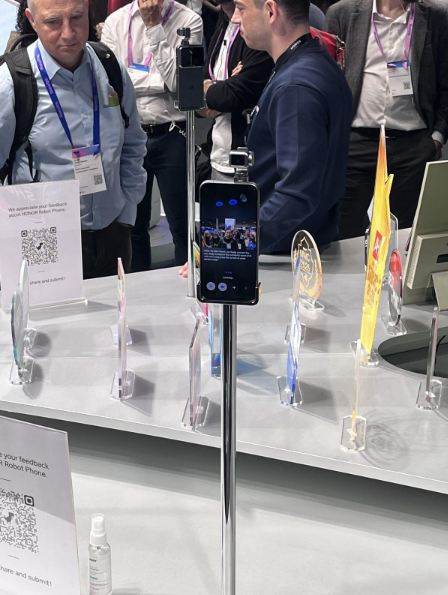
Honor’s “Robot Phone” gathered a consistent crowd throughout the days I attended. Mounted on an articulated pole, the device uses a camera and AI to track, identify, and respond to people in front of it holding eye contact, generating contextual responses, and adapting its “personality” to the interaction. It sits somewhere between a smartphone and a companion device. Whether this becomes a product category or remains a concept demo, I genuinely couldn’t tell. Either way, it illustrates how quickly the boundary between device and agent is blurring.
The Flying Car
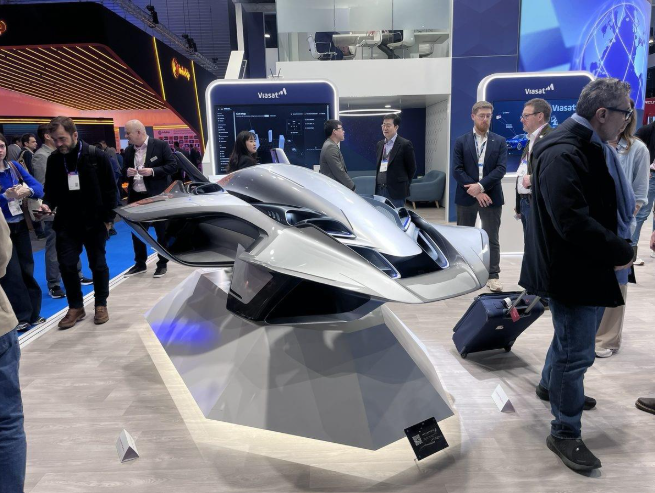
Viasat had a fullscale eVTOL (electric vertical takeoff and landing) aircraft concept parked on their stand, positioned as a demonstration of satellite connectivity as the infrastructure backbone for autonomous aerial mobility. Whether personal air taxis become mainstream in the next decade is a question I’ll leave to others, but the fact that Viasat a serious satellite communications business is investing in this narrative says something about where high bandwidth, always on connectivity is expected to be needed.
Summary
As a first-time attendee, I came to MWC with the expectation that I’d leave with a clearer picture of what’s coming. I did, though not always in the way I expected. Some technologies I assumed would feel distant were much closer. Some things that were billed as revolutionary looked, in person, more like iteration.
The overarching narrative from MWC 2026 was one of convergence: AI moving into the fabric of networks, robots requiring the connectivity infrastructure we provide, 6G being designed around the AI native principles being proven out today, and new competitors entering the market from directions that weren’t obvious a year ago. None of these are slow-moving trends. They are all happening now.
